
Anti-Aging
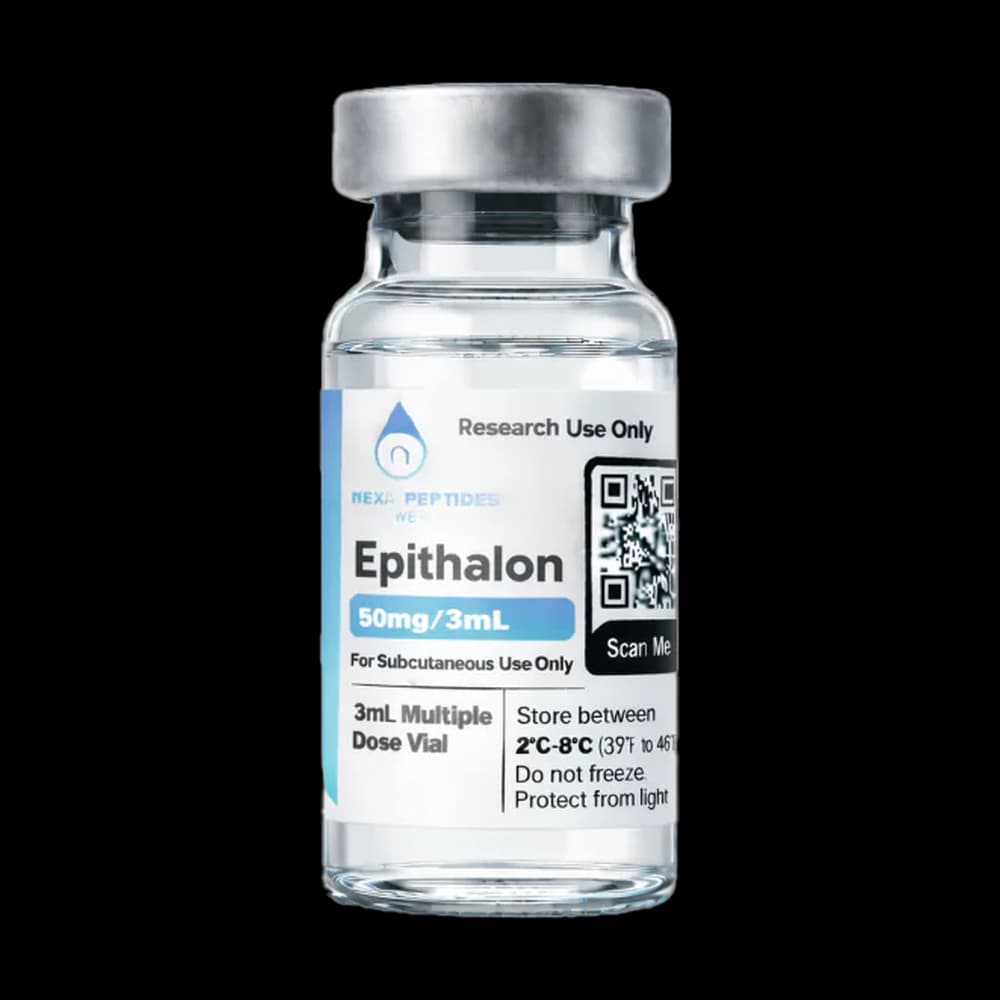
Epithalon — - 50mg
SKU: NXP-EPI-50
Epithalon 50mg lyophilized peptide. A synthetic tetrapeptide studied for its interaction with telomere biology, cellular aging pathways, and longevity mechanisms. FOR RESEARCH USE ONLY..
Product Details
Epithalon (epitalon) is a synthetic tetrapeptide (Ala-Glu-Asp-Gly) based on the naturally occurring epithalamin peptide produced by the pineal gland. This 50mg research-grade lyophilized preparation provides material for laboratory studies investigating telomerase activation, telomere length maintenance, and cellular senescence pathways.
Published research has examined Epithalon in the context of telomerase reverse transcriptase (hTERT) gene expression, circadian rhythm regulation, melatonin secretion modulation, and antioxidant enzyme activity. Studies in cellular aging models have explored its potential influence on replicative lifespan and genomic stability markers.
Each vial is produced under stringent quality-control standards with HPLC purity exceeding 98% and mass spectrometry confirmation of molecular identity. Endotoxin-tested and verified for sterility. Full certificate of analysis included with each lot.
Store lyophilized at -20°C. Reconstituted at 2-8°C, use within 60 days. Avoid repeated freeze-thaw cycles to maintain peptide integrity.
For research and laboratory use only.
About Epithalon
Epithalon, also known as Epitalon, is a synthetic tetrapeptide with the amino acid sequence Alanine-Glutamic acid-Aspartic acid-Glycine (Ala-Glu-Asp-Gly). It is the synthetic analogue of Epithalamin, a polypeptide extract derived from the pineal gland of bovine subjects. First identified and studied in the late 20th century, Epithalon has become a significant subject of investigation in the field of gerontology and cellular biology. Its primary notability stems from its reported ability to modulate fundamental biochemical processes associated with aging, most significantly the regulation of telomerase activity and the normalization of neuroendocrine functions.
The molecular structure of Epithalon is relatively simple, consisting of four amino acids, which contributes to its stability and potential for cellular interaction. Its molecular weight is approximately 390.35 g/mol. In laboratory settings, Epithalon is studied for its capacity to influence the pineal gland, which is central to regulating circadian rhythms through melatonin synthesis. Research suggests that by interacting with pineal functions, Epithalon may help restore cyclical hormonal release patterns that often become dysregulated with age, such as the balance between melatonin and cortisol.
This peptide is of particular interest to researchers investigating the mechanisms of cellular senescence. The 'Hayflick limit,' which describes the finite number of times a normal human cell population will divide before it stops, is directly linked to the progressive shortening of telomeres. Epithalon's proposed ability to activate the enzyme telomerase, which adds nucleotide repeats to the ends of chromosomes, makes it a valuable tool for studying how to counteract this fundamental aging process in vitro. Researchers utilizing Epithalon in their protocols are typically exploring its potential to extend cellular lifespan, improve physiological functions in animal models, and elucidate the complex interplay between the endocrine system and the cellular aging clock.
Nexa Peptides provides high-purity Epithalon (>99%) for laboratory and research use only. This product is not intended for human consumption or therapeutic application. It is a powerful tool for investigators seeking to understand the biochemical pathways governing longevity, cellular health, and the aging process at a molecular level. Each batch is rigorously tested to ensure identity and purity, providing researchers with a reliable reagent for their studies.
Mechanism of Action
The primary mechanism of action investigated for Epithalon centers on its interaction with the genetic and endocrine systems, particularly its role in upregulating telomerase activity and modulating pineal gland function. The most extensively studied effect is its ability to induce the expression of the catalytic subunit of telomerase, known as hTERT (human Telomerase Reverse Transcriptase). In vitro studies in human cell cultures have demonstrated that Epithalon can bind to the promoter region of the hTERT gene. This interaction is believed to trigger a conformational change that facilitates the binding of transcription factors, thereby initiating the transcription of the gene and subsequent synthesis of the telomerase enzyme. By increasing the intracellular concentration of telomerase, Epithalon facilitates the elongation of telomeres, the protective nucleoprotein caps at the ends of chromosomes. This process counteracts the natural telomere shortening that occurs with each cycle of cell division, thus potentially extending the replicative lifespan of cells and delaying the onset of senescence in laboratory models.
Beyond its effects on telomeres, Epithalon's mechanism involves the regulation of the neuroendocrine system via the pineal gland. It is a synthetic version of Epithalamin, a natural pineal peptide mixture, and is proposed to mimic its biological activities. Research in animal models suggests that Epithalon can normalize the age-related decline in melatonin synthesis and release from the pineal gland. This restoration of a youthful melatonin secretion pattern helps re-establish healthy circadian rhythms. Proper circadian function is critical for regulating a cascade of downstream physiological processes, including the sleep-wake cycle, cortisol release patterns, and immune responses. By modulating the hypothalamic-pituitary-adrenal (HPA) axis, Epithalon has been shown in some preclinical studies to lower elevated cortisol levels, a common biomarker of stress and aging.
Furthermore, Epithalon exhibits antioxidant properties, although the precise molecular pathway is still under investigation. Some research indicates it may enhance the expression of endogenous antioxidant enzymes, such as superoxide dismutase (SOD) and glutathione peroxidase (GPx), within cells. This action helps neutralize reactive oxygen species (ROS), reducing oxidative stress and cellular damage, which are key contributors to the aging process. The peptide's ability to reduce lipid peroxidation and protect cellular components from oxidative damage has been observed in various experimental models.
Lastly, some studies suggest Epithalon may influence gene expression beyond hTERT. Investigations using microarray analysis have indicated that it can modulate the expression of genes involved in protein synthesis, cellular metabolism, and immune function. For instance, in studies on aging rodents, administration of Epithalon was linked to the normalization of T-cell function and a restoration of thymic activity, suggesting a role in immunomodulation. The collective mechanisms—telomerase activation, neuroendocrine regulation, antioxidant activity, and gene expression modulation—make Epithalon a multifaceted compound for studying the molecular underpinnings of aging. All investigations into these pathways are confined to preclinical, in vitro, and in vivo laboratory research. This product is for Research Use Only.
Research Applications
Epithalon is a subject of intensive investigation across several domains of biomedical research, primarily focused on gerontology and the biology of aging. Its unique proposed mechanism of activating telomerase makes it a valuable tool for researchers studying cellular senescence. In vitro studies utilizing human fibroblast cell lines, for example, have explored Epithalon's capacity to overcome the Hayflick limit, demonstrating an extended replicative lifespan and a delayed onset of senescent morphology. These cell-based models allow researchers to dissect the molecular pathways by which telomere elongation impacts cellular health, gene expression, and resistance to apoptotic signals.
In preclinical animal models, typically rodents, research applications have expanded to systemic effects. Gerontological studies have investigated whether administration of Epithalon can ameliorate age-related physiological decline. These studies often measure biomarkers of aging, such as antioxidant enzyme activity, melatonin and cortisol levels, and immune function markers. For instance, researchers have explored its effects on restoring circadian rhythms in older animals, observing a normalization of nocturnal melatonin peaks. Such research aims to understand the link between the central 'pacemaker' in the pineal gland and the peripheral aging of various organ systems.
Immunological research represents another significant area of application. The age-associated decline of the immune system, or immunosenescence, is characterized by thymic involution and a reduction in T-cell function. Studies in aging mice have investigated Epithalon's potential to restore certain immunological parameters. Researchers have examined its effects on thymic structure, T-cell proliferation, and the overall functionality of the adaptive immune system in these models. These investigations provide insights into the interplay between the neuroendocrine system and immune regulation during aging.
Additionally, Epithalon has been studied in the context of metabolic and retinal health in animal models. Some research has explored its effects on glucose metabolism and insulin sensitivity in models of age-related metabolic syndrome. In the field of ophthalmology, preclinical studies using rodent models of retinitis pigmentosa have investigated Epithalon's potential to preserve retinal structure and function, possibly through its antioxidant and gene-regulatory effects. These diverse applications underscore the peptide's utility as a research compound for exploring fundamental aging processes across multiple biological systems. All uses of Epithalon are strictly for laboratory-based research and are not intended for any form of human or therapeutic use.
Formulation & Handling
For optimal stability and integrity, lyophilized Epithalon should be stored in a freezer at or below -20°C (-4°F). When stored under these conditions, the lyophilized powder remains stable for an extended period. Keep the vial sealed and protected from light until ready for reconstitution. It is crucial to prevent frequent temperature fluctuations, which can degrade the peptide over time.
Reconstitution should be performed under sterile conditions. Using a calibrated micropipette, slowly inject the desired volume of a suitable sterile diluent, such as bacteriostatic water containing 0.9% benzyl alcohol, into the vial of lyophilized peptide. Aim the stream of diluent against the side of the vial to avoid foaming. Gently swirl or roll the vial to dissolve the powder completely; do not shake vigorously, as this can cause denaturation of the peptide. Ensure the powder is fully dissolved before use in any research application.
Once reconstituted, the Epithalon solution should be stored refrigerated at 2°C to 8°C (36°F to 46°F). For short-term studies, the solution typically remains stable for several weeks at this temperature. For long-term research protocols, it is best practice to aliquot the freshly reconstituted solution into smaller, single-use volumes and store them frozen at -20°C or below. This practice minimizes waste and prevents degradation from repeated freeze-thaw cycles. Always use sterile techniques when handling the peptide to prevent microbial contamination.
Quality Standards
Nexa Peptides is committed to providing researchers with the highest quality reagents for their laboratory investigations. Our Epithalon is synthesized in a cGMP (Current Good Manufacturing Practice) compliant facility, ensuring stringent process controls and a consistent, high-grade product. Each batch of Epithalon undergoes a rigorous quality control process to verify its identity, purity, and integrity before it is made available to the research community.
The purity of our Epithalon is confirmed using High-Performance Liquid Chromatography (HPLC), a highly sensitive analytical technique. We guarantee a purity level of greater than 99% for every batch, ensuring that your experimental results are not confounded by impurities. The identity and molecular weight of the peptide are verified using Mass Spectrometry (MS), confirming that the product has the correct amino acid sequence and structure (Ala-Glu-Asp-Gly).
Furthermore, to ensure the safety of in vitro and cell culture applications, each lot is tested for the presence of endotoxins. A comprehensive Certificate of Analysis (COA) is available for every product batch, providing detailed results from our third-party analytical testing. This documentation offers full transparency and allows for complete traceability, giving researchers the utmost confidence in the quality and reliability of our Epithalon for their critical research needs. This product is supplied strictly for Research Use Only.
Frequently Asked Questions
What is Epithalon?
How is Epithalon synthesized?
What is the molecular weight of Epithalon?
What research areas use Epithalon?
How should Epithalon be stored?
How should Epithalon be reconstituted for research?
What purity grade is Nexa Peptides' Epithalon?
Is Epithalon available with a Certificate of Analysis?
Explore Related Research
Customer Reviews
4 reviews
Paul F.May 22, 2026
I have more in the tank for both workouts and the back half of the work day. Big quality of life upgrade.
Logan P.Verified PurchaseApr 15, 2026
Pretty pleased. The packaging was more minimal than I expected, though everything arrived intact.
James S.Verified PurchaseMar 31, 2026
Third order in and I have stopped shopping around. They have earned the repeat business.
Ashley K.Verified PurchaseMar 18, 2026
Second order and still impressed.