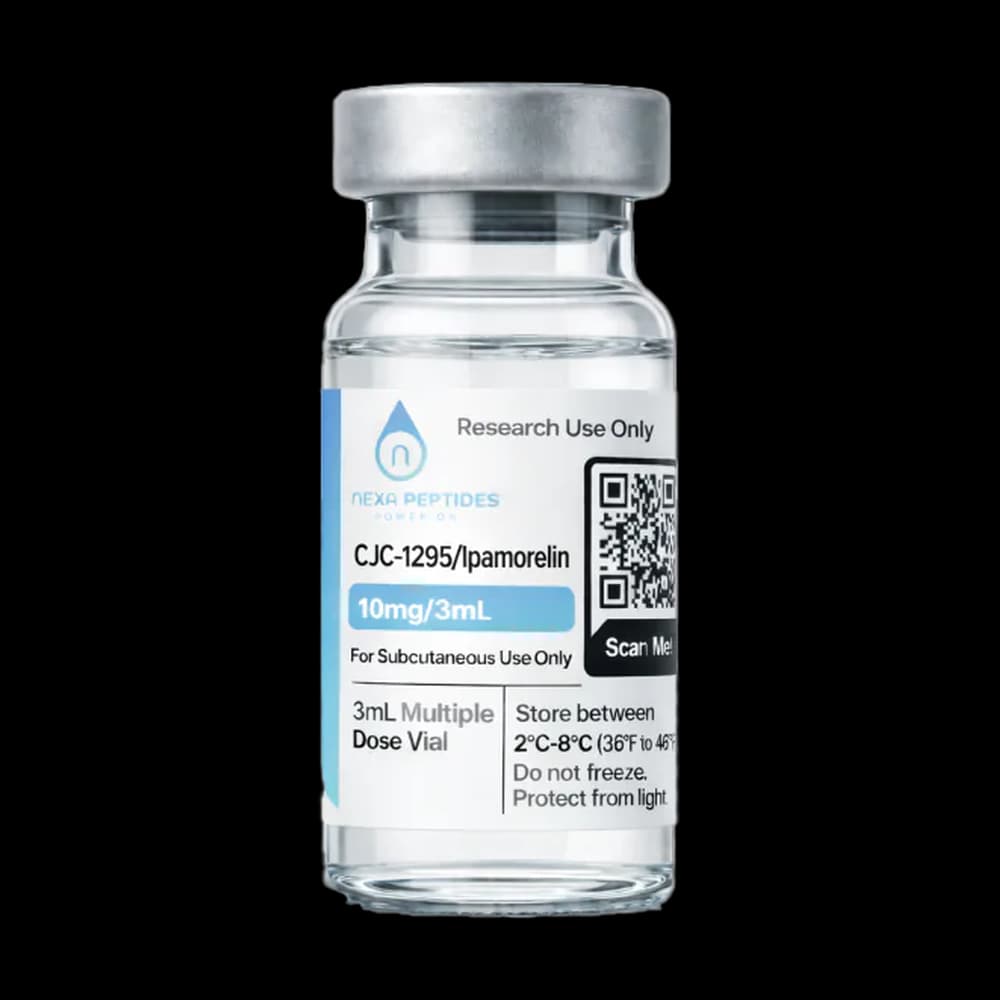

Growth Hormone
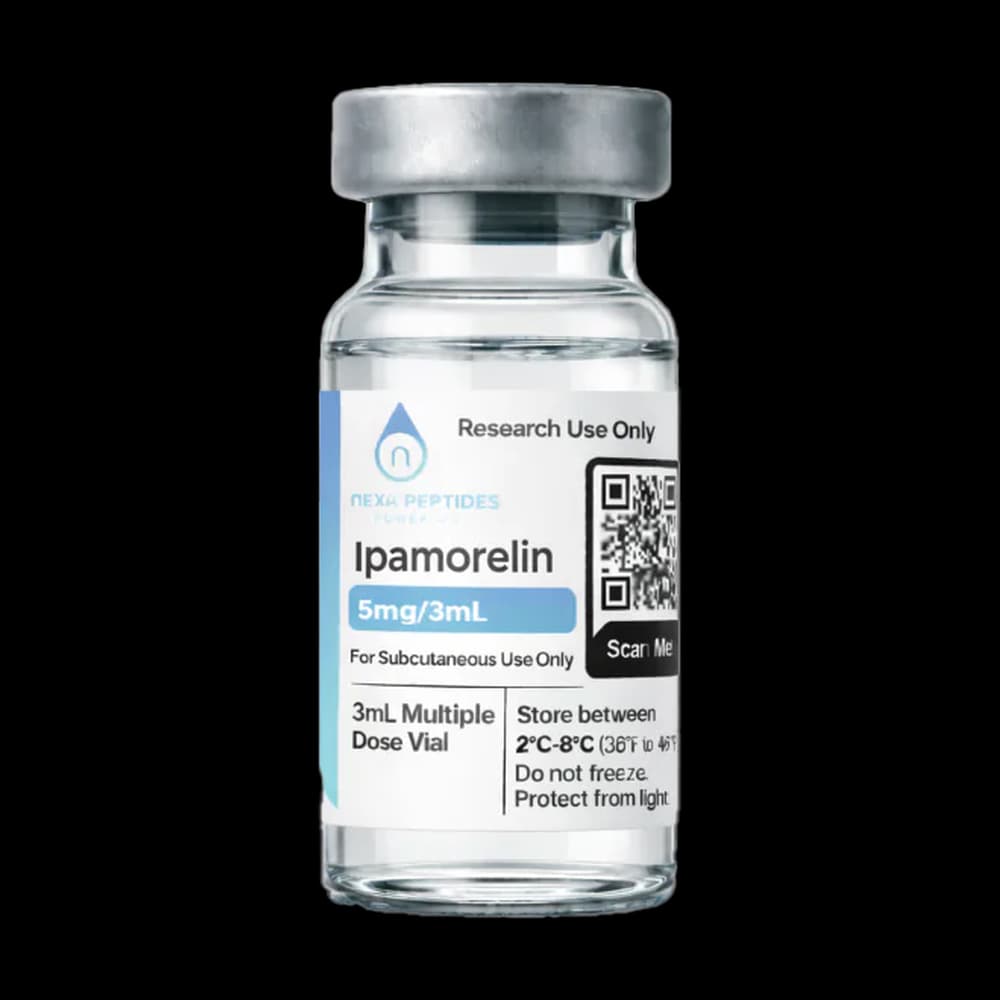
Ipamorelin — - 5mg
SKU: NXP-IPA-5
Ipamorelin 5mg lyophilized peptide. Synthetic growth hormone-releasing peptide studied for GHS-R signaling pathway interaction. For research use only.
Product Details
**For best results, this product should be reconstituted with Hospira Bacteriostatic Water, which will be automatically added to your cart. Use of any alternative diluent is at your own discretion, and we are not responsible for any resulting changes in appearance or consistency, including cloudiness or gelling of the research product.*
Ipamorelin is a selective pentapeptide growth hormone secretagogue that binds to the ghrelin/GHS receptor to stimulate growth hormone release from the pituitary gland. Unlike other GH secretagogues, Ipamorelin is highly selective and does not significantly affect cortisol, prolactin, or ACTH levels at standard research doses.
Preclinical and clinical studies have examined Ipamorelin for its effects on GH pulsatility, bone density, body composition, and recovery markers. Its selectivity profile makes it a valuable research tool for studying GH-axis modulation without the confounding hormonal effects seen with less selective compounds.
Each vial contains 5mg of Ipamorelin in lyophilized form, manufactured to a purity exceeding 98% as confirmed by HPLC analysis. Batch consistency is ensured through rigorous third-party testing and quality assurance protocols.
Store lyophilized at -20C. Reconstituted at 2-8C, use within 60 days.
For research and laboratory use only.
About Ipamorelin
Ipamorelin is a highly selective, third-generation growth hormone secretagogue (GHS) and a potent ghrelin mimetic, utilized extensively in biochemical and physiological research. Structurally, it is a pentapeptide with the amino acid sequence Aib-His-D-2-Nal-D-Phe-Lys-NH2. Its unique composition, which includes the non-proteinogenic amino acid α-aminoisobutyric acid (Aib) and D-isomers of 2-naphthylalanine and phenylalanine, confers significant resistance to enzymatic degradation and enhances its binding affinity and stability compared to endogenous peptides. This structural modification results in a prolonged biological half-life, making it a reliable tool for investigating the effects of sustained growth hormone (GH) axis stimulation in preclinical models.
In the landscape of GHS research compounds, Ipamorelin is distinguished by its remarkable specificity. Unlike earlier-generation secretagogues such as GHRP-6 or GHRP-2, which can induce notable increases in cortisol, prolactin, and appetite, Ipamorelin’s action is precisely targeted to the stimulation of GH release. At concentrations typically employed in research settings, it does not significantly impact the hypothalamic-pituitary-adrenal (HPA) axis or other pituitary hormones. This high degree of selectivity allows researchers to isolate and study the downstream effects of pulsatile GH release without the confounding variables introduced by a broader hormonal response.
This precision makes Ipamorelin an invaluable asset for studies focused on the somatotropic axis. Researchers utilize it to explore the intricate mechanisms governing GH secretion, the physiological consequences of age-related GH decline (somatopause), and the potential for GH-mediated cellular repair and regeneration. Its ability to mimic the action of ghrelin at the growth hormone secretagogue receptor (GHSR-1a) provides a controlled method for activating this critical pathway. By providing a clean, targeted signal, Ipamorelin enables rigorous investigation into the roles of GH and its primary mediator, IGF-1, in metabolic regulation, bone metabolism, and tissue homeostasis. All research applications of Ipamorelin are strictly for laboratory and preclinical investigation. For Research Use Only.
Mechanism of Action
The mechanism of action for Ipamorelin is centered on its function as a potent and selective agonist of the growth hormone secretagogue receptor type 1a (GHSR-1a). The GHSR-1a is a G protein-coupled receptor (GPCR) predominantly expressed on somatotroph cells within the anterior pituitary gland, as well as in neurons of the hypothalamic arcuate nucleus. Ipamorelin mimics the action of the endogenous ligand, ghrelin, binding to this receptor with high affinity and initiating a downstream intracellular signaling cascade that culminates in the synthesis and release of growth hormone (GH).
Upon binding to the GHSR-1a, Ipamorelin induces a conformational change in the receptor, leading to the activation of the associated heterotrimeric G protein, specifically Gq/11. The activated Gαq subunit stimulates phospholipase C (PLC), a membrane-bound enzyme that catalyzes the hydrolysis of phosphatidylinositol 4,5-bisphosphate (PIP2) into two secondary messengers: inositol 1,4,5-trisphosphate (IP3) and diacylglycerol (DAG). This pathway is the primary driver of Ipamorelin-induced GH exocytosis.
The generation of IP3 triggers the release of calcium (Ca2+) from intracellular stores, primarily the endoplasmic reticulum, by binding to IP3 receptors. The subsequent rapid and transient increase in cytosolic Ca2+ concentration is the critical signal for the fusion of GH-containing secretory granules with the plasma membrane of the somatotroph, a process known as exocytosis. This results in a distinct pulse of GH being released into circulation. Concurrently, DAG activates protein kinase C (PKC), which can further modulate GH release and, through various transcription factors, influence the long-term expression of the GH gene.
An important aspect of Ipamorelin's mechanism, often explored in research, is its synergistic interaction with the endogenous Growth Hormone-Releasing Hormone (GHRH). GHRH acts on a separate receptor (GHRHR), which is coupled to the Gs protein and activates the adenylyl cyclase-cAMP-protein kinase A (PKA) pathway. When Ipamorelin and GHRH pathways are activated simultaneously in experimental models, the resulting GH release is supra-additive. This synergy is attributed to the complementary actions of the two signaling cascades: the IP3/Ca2+ pathway sensitizes the somatotrophs to the effects of the cAMP/PKA pathway, leading to a much more robust secretory response than either agonist could produce alone.
Unlike ghrelin, which has pleiotropic effects including appetite stimulation via hypothalamic pathways, Ipamorelin's design confers high selectivity for pituitary GHSR-1a. This minimizes off-target effects, allowing researchers to study the specific consequences of GH axis activation. Furthermore, investigations into extra-pituitary GHSR expression in tissues such as bone, cardiac muscle, and the gastrointestinal tract utilize Ipamorelin as a specific pharmacological tool to probe the localized, non-canonical functions of this receptor system in preclinical studies. These investigations are purely for research purposes and do not imply any clinical utility.
Research Applications
Ipamorelin is a specialized tool employed in a wide range of preclinical research applications aimed at elucidating the complex physiology of the growth hormone (GH) / insulin-like growth factor 1 (IGF-1) axis. Its primary value lies in its ability to induce a clean, pulsatile release of GH without concurrently stimulating other pituitary hormones like cortisol or prolactin. This selectivity allows for precise investigation of GH-dependent processes in various *in vitro* and *in vivo* models.
In the field of metabolic research, Ipamorelin has been studied in rodent models of aging and metabolic dysfunction. Investigations focus on its potential to modulate body composition by stimulating GH, which in turn promotes lipolysis in adipose tissue and enhances protein synthesis in skeletal muscle. Researchers use Ipamorelin to explore the biochemical pathways through which GH influences substrate metabolism, insulin sensitivity, and the age-related decline in lean body mass, a condition often studied in the context of somatopause.
A significant area of investigation involves bone and connective tissue biology. Preclinical studies in animal models of osteoporosis or fracture healing have utilized Ipamorelin to examine the effects of GH/IGF-1 axis stimulation on bone remodeling. These studies assess parameters such as bone mineral density, trabecular architecture, and the rate of collagen synthesis. The objective is to understand the molecular mechanisms by which GH and IGF-1 signaling promotes osteoblast proliferation and differentiation, key processes in maintaining skeletal integrity.
Given that the GHSR-1a receptor is also expressed in the gastrointestinal (GI) tract, Ipamorelin is used in gastroenterological research. Studies in animal models of postoperative ileus or other motility disorders investigate whether selective GHSR-1a agonism can restore or enhance gastric emptying and intestinal transit. This research aims to differentiate the prokinetic effects mediated by the GHSR-1a from other ghrelin-related actions, providing insights into the receptor's role in regulating gut function.
At the cellular level, Ipamorelin is applied in *in vitro* studies using various cell cultures, including chondrocytes, myocytes, and fibroblasts, to probe the signaling pathways downstream of GH/IGF-1 activation. These experiments explore the impact on cell proliferation, differentiation, apoptosis, and extracellular matrix production. By providing a specific and reliable method to activate this axis, Ipamorelin helps researchers dissect the fundamental cellular processes that contribute to tissue maintenance and repair. All studies involving Ipamorelin are conducted within the confines of laboratory research and are not for human or therapeutic use.
Formulation & Handling
For optimal stability and integrity, lyophilized Ipamorelin should be stored in a freezer at or below -20°C. When stored under these conditions, the peptide remains stable for an extended period. For short-term storage prior to reconstitution, refrigeration at 2-8°C is acceptable. It is crucial to protect the lyophilized powder from direct light and moisture to prevent degradation.
Reconstitution of Ipamorelin should be performed using sterile, high-purity bacteriostatic water. To prepare the solution, gently inject the appropriate volume of solvent down the side of the vial, avoiding direct streams onto the peptide powder. Do not shake or agitate the vial vigorously. Instead, gently swirl or rotate the vial until the powder is completely dissolved. The final concentration of the reconstituted peptide will depend on the specific requirements of the research protocol. Adherence to aseptic techniques during reconstitution is essential to prevent microbial contamination.
Once reconstituted, the Ipamorelin solution should be stored refrigerated at 2-8°C and is typically stable for several weeks. For research protocols extending beyond this period, it is best practice to aliquot the freshly reconstituted solution into multiple sterile, sealed vials and store them frozen at -20°C. This practice minimizes the number of freeze-thaw cycles, which can degrade the peptide's structure and activity. Before use in an experiment, a frozen aliquot should be thawed slowly in a refrigerator. All handling must be performed in a controlled laboratory setting.
Quality Standards
At Nexa Peptides, we are committed to providing researchers with Ipamorelin of the highest purity and quality to ensure the validity and reproducibility of experimental results. Each batch of Ipamorelin undergoes rigorous analytical testing, with purity consistently verified to be greater than 99% by High-Performance Liquid Chromatography (HPLC). This technique separates, identifies, and quantifies each component in the mixture, ensuring the final product is free from significant impurities.
To confirm the identity and structural integrity of the peptide, each lot is also subjected to Mass Spectrometry (MS) analysis. This analysis verifies that the molecular weight of the synthesized peptide corresponds precisely to its theoretical mass, confirming the correct amino acid sequence. Furthermore, every batch is tested for the presence of endotoxins to ensure it is suitable for use in sensitive cell-based assays and *in vivo* research models. Our Ipamorelin is synthesized in a facility that adheres to current Good Manufacturing Practices (cGMP), guaranteeing a controlled and consistent production process.
Transparency and documentation are cornerstones of our quality assurance. A comprehensive, third-party Certificate of Analysis (COA) is available for every lot of Ipamorelin. This document provides detailed results from HPLC and MS analyses, as well as the specific lot number. This lot-specific traceability allows researchers to maintain precise records and ensures a consistent, high-quality product for all laboratory research applications. This product is intended strictly for Research Use Only.
Frequently Asked Questions
What is Ipamorelin?
How is Ipamorelin synthesized?
What is the molecular weight of Ipamorelin?
What research areas use Ipamorelin?
How should Ipamorelin be stored?
How should Ipamorelin be reconstituted for research?
What purity grade is Nexa Peptides' Ipamorelin?
Is Ipamorelin available with a Certificate of Analysis?
Explore Related Research
Customer Reviews
4 reviews
Logan M.Verified PurchaseJun 5, 2026
Switched over from another supplier after a bad batch and the difference here is night and day. Glad I made the change.
Maria F.Verified PurchaseMay 10, 2026
My appetite, sleep and recovery all feel dialed in since I started. Everything is just working.
Bianca P.May 9, 2026
Recovery from heavy training has improved and I wake up far less groggy than I used to.
Brian B.Apr 17, 2026
Three weeks in and the recovery benefit is the standout. Back to training hard sooner.