
Growth Hormone
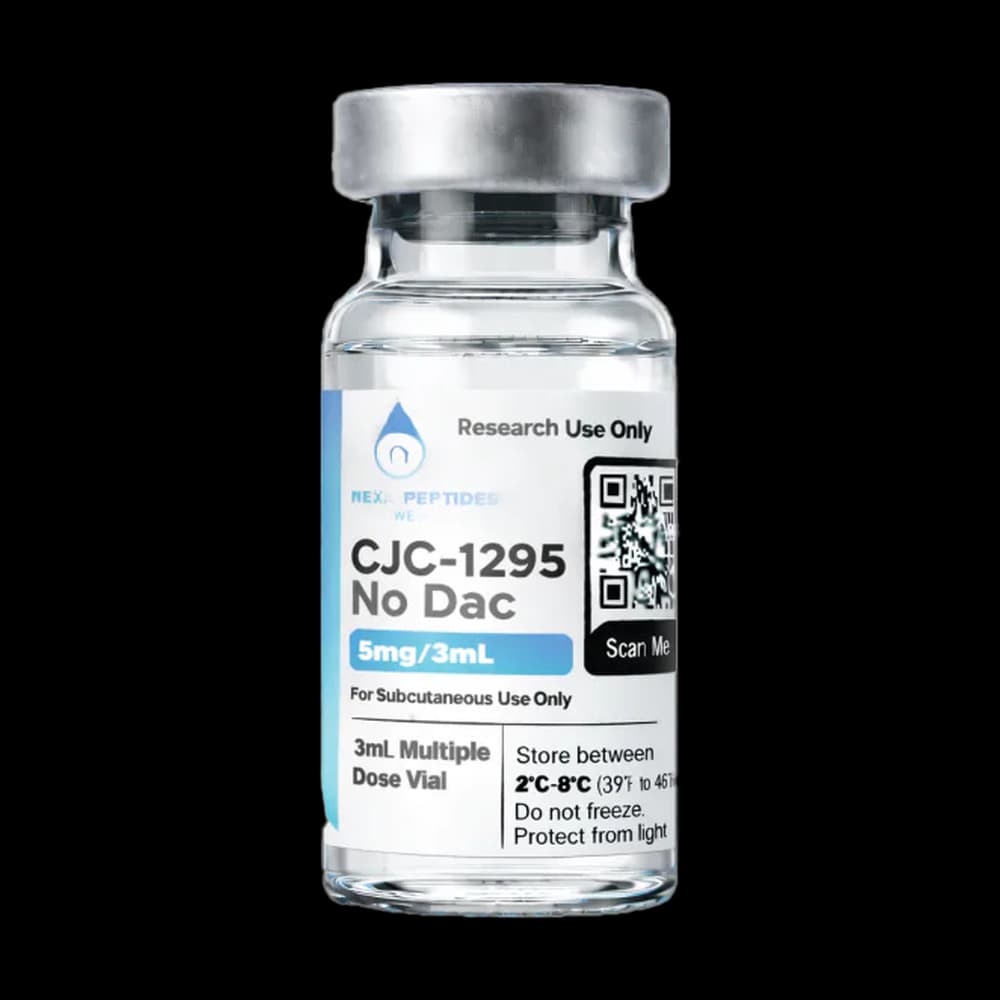
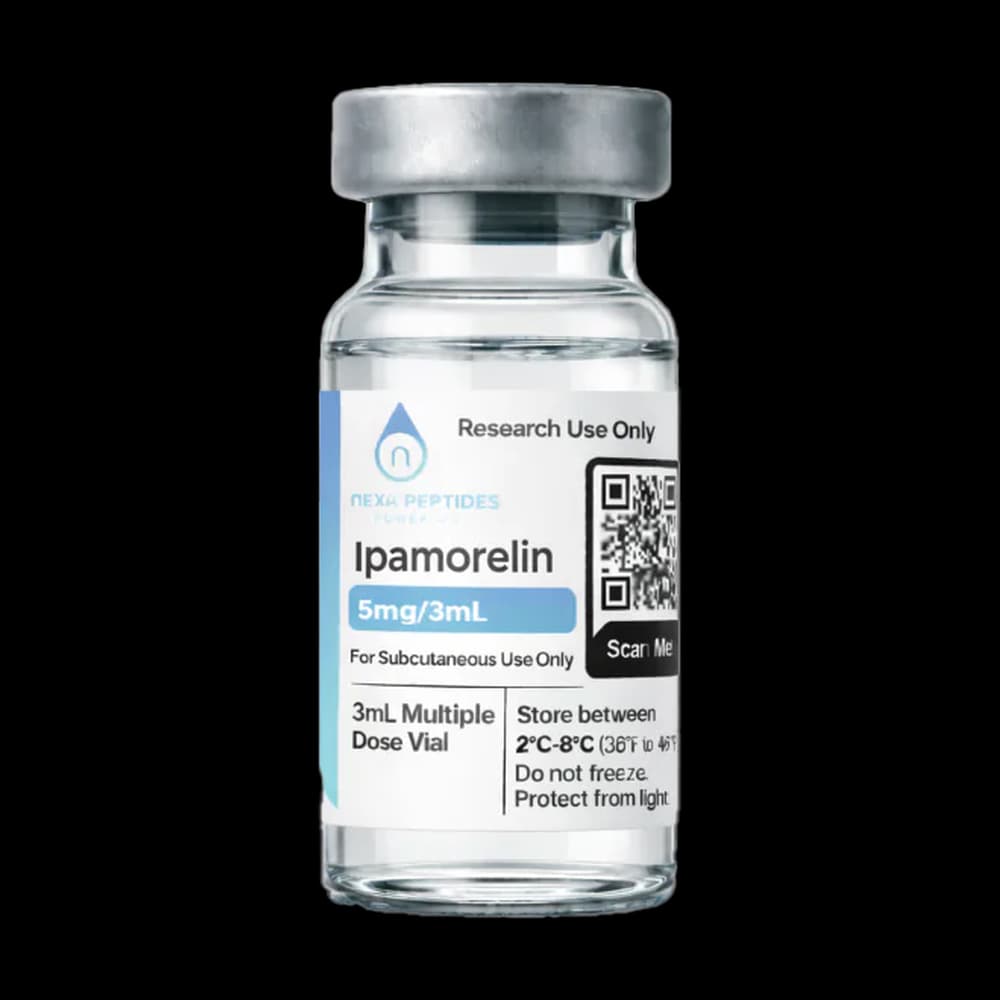
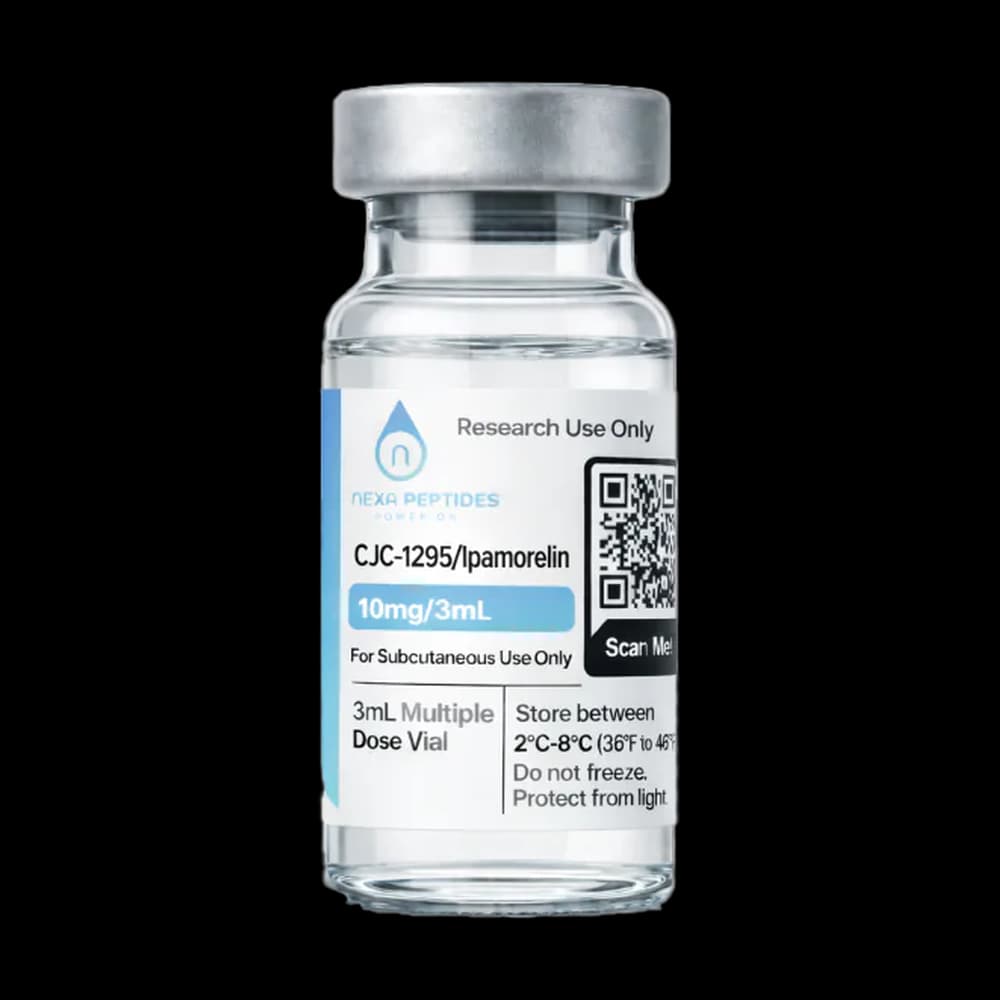
CJC-1295 / Ipamorelin (No DAC) — CJC-1295/Ipamorelin (No DAC) 10mg
SKU: NXP-CJCIPA-10
Synergistic GH-support blend combining extended GHRH receptor activation with targeted ghrelin receptor stimulation for enhanced effects. For research use only.
Product Details
*For best results, this product should be reconstituted with Hospira Bacteriostatic Water, which will be automatically added to your cart. Use of any alternative diluent is at your own discretion, and we are not responsible for any resulting changes in appearance or consistency, including cloudiness or gelling of the research product.*
This combination preparation pairs CJC-1295 (No DAC) with Ipamorelin in a single 10mg lyophilized vial, providing researchers with a convenient dual-peptide formulation for studying synergistic growth hormone releasing mechanisms.
CJC-1295 (No DAC) is a GHRH analog that stimulates GH release through the GHRH receptor, while Ipamorelin is a selective growth hormone secretagogue that acts through the ghrelin receptor. Research suggests that co-administration of these peptides may produce amplified GH release compared to either peptide alone, without significantly elevating cortisol or prolactin levels.
Each vial contains a total of 10mg of the CJC-1295/Ipamorelin blend, produced under strict manufacturing standards with purity exceeding 98% as confirmed by HPLC and mass spectrometry. This combination format reduces preparation time and ensures consistent dosing ratios across experiments.
Store lyophilized at -20C. Reconstituted at 2-8C, use within 60 days.
For research and laboratory use only.
About CJC-1295 / Ipamorelin (No DAC)
CJC-1295 / Ipamorelin (No DAC) is a precisely formulated combination of two synthetic peptides designed for advanced endocrinological research. This blend synergistically targets the growth hormone (GH) axis through distinct and complementary mechanisms. The first component, CJC-1295 (No DAC), also known as Modified GRF (1-29) or Mod GRF 1-29, is a truncated synthetic analogue of growth hormone-releasing hormone (GHRH). It consists of the first 29 amino acids of human GHRH, with four specific amino acid substitutions (Tyr1 -> D-Ala2, Gly15 -> Ala15, etc.) that confer increased resistance to enzymatic degradation by dipeptidyl peptidase-4 (DPP-4) and enhance its binding affinity to the GHRH receptor. Its amino acid sequence is Tyr-D-Ala-Asp-Ala-Ile-Phe-Thr-Gln-Ser-Tyr-Arg-Lys-Val-Leu-Ala-Gln-Leu-Ser-Ala-Arg-Lys-Leu-Leu-Gln-Asp-Ile-Leu-Ser-Arg-NH2. The 'No DAC' designation signifies that it lacks the Drug Affinity Complex, resulting in a shorter physiological half-life of approximately 30 minutes, which allows for more controlled, pulsatile GH release mimicking natural endocrine rhythms in research settings.
The second component, Ipamorelin, is a highly selective, third-generation growth hormone secretagogue (GHS) and a ghrelin mimetic. It is a pentapeptide with the sequence Aib-His-D-2-Nal-D-Phe-Lys-NH2. Ipamorelin selectively binds to the ghrelin receptor (GHS-R1a) in the anterior pituitary gland, stimulating GH release. Its high specificity is a key area of research interest, as it has been shown in preclinical models to induce a strong GH pulse without significantly impacting other hormones such as cortisol, prolactin, or aldosterone, and without the appetite-stimulating effects associated with ghrelin itself.
By combining Mod GRF 1-29 and Ipamorelin, researchers can investigate the effects of a potent, dual-pathway stimulation of GH secretion. This combination allows for the study of amplified, yet physiologically patterned, GH release. This precise control over the GH axis makes the blend a valuable tool in laboratory studies focused on cellular growth, metabolism, tissue repair, and the complex signaling cascades governed by the GH/IGF-1 axis. All applications are strictly for in vitro and in vivo laboratory research and are not intended for human use. This product is for Research Use Only.
Mechanism of Action
The mechanism of action for the CJC-1295 / Ipamorelin (No DAC) combination is a classic example of biochemical synergy, targeting two distinct G-protein coupled receptors (GPCRs) on the surface of somatotroph cells in the anterior pituitary to potentiate growth hormone (GH) synthesis and secretion. Each peptide engages a separate signaling pathway, and their concurrent activation leads to a greater physiological response than either could elicit independently.
CJC-1295 (No DAC), as a GHRH analogue, binds with high affinity to the GHRH receptor (GHRHR). This receptor is coupled to a stimulatory G-protein (Gs). Upon ligand binding, the Gs alpha subunit is activated, which in turn stimulates the enzyme adenylyl cyclase. Adenylyl cyclase catalyzes the conversion of ATP to cyclic AMP (cAMP), a crucial second messenger. The subsequent rise in intracellular cAMP levels activates Protein Kinase A (PKA). Activated PKA translocates to the nucleus, where it phosphorylates the cAMP Response Element-Binding Protein (CREB). Phosphorylated CREB binds to cAMP response elements (CRE) within the promoter region of the GH gene, thereby upregulating the transcription of GH mRNA. This leads to an increased synthesis of GH, effectively expanding the pool of GH available for secretion within the somatotroph.
Concurrently, Ipamorelin acts as a selective agonist for the growth hormone secretagogue receptor type 1a (GHS-R1a), also known as the ghrelin receptor. The GHS-R1a is primarily coupled to the Gq/11 G-protein. Activation of this pathway stimulates phospholipase C (PLC). PLC hydrolyzes the membrane phospholipid phosphatidylinositol 4,5-bisphosphate (PIP2) into two second messengers: inositol 1,4,5-trisphosphate (IP3) and diacylglycerol (DAG). IP3 diffuses through the cytosol and binds to IP3 receptors on the endoplasmic reticulum, triggering the release of stored calcium ions (Ca2+) into the cytoplasm. This rapid increase in intracellular Ca2+ concentration is the primary signal for the exocytosis of vesicles containing pre-synthesized GH. Additionally, DAG and Ca2+ work together to activate Protein Kinase C (PKC), which further contributes to the machinery of GH vesicle fusion and release.
Ipamorelin may also exert its effects by antagonizing somatostatin, the primary physiological inhibitor of GH release. By suppressing somatostatin's inhibitory tone at the pituitary level, Ipamorelin further enhances the stimulatory signal provided by CJC-1295. The synergy arises from this dual-pronged attack: CJC-1295 increases the synthesis and transcription of GH (filling the reservoir), while Ipamorelin potently triggers its release and reduces inhibitory signals. This coordinated action results in a robust, pulsatile release of GH that closely mimics the body's natural endocrine patterns, providing a powerful and precise tool for researchers studying the GH axis.
Research Applications
The CJC-1295 / Ipamorelin (No DAC) combination is a valuable tool for a wide range of preclinical research applications, primarily centered on elucidating the complex roles of the growth hormone/insulin-like growth factor 1 (GH/IGF-1) axis in various physiological and pathophysiological states. Its ability to induce a strong, clean, and pulsatile GH release allows investigators to study downstream effects with high precision in controlled laboratory settings.
In the field of metabolic research, this peptide blend is utilized in animal models to investigate its influence on body composition, energy expenditure, and nutrient partitioning. Studies often focus on how enhanced GH pulsatility affects lipolysis in adipose tissue and promotes lean muscle mass accretion. Researchers use this compound in models of obesity, metabolic syndrome, and insulin resistance to explore potential modulatory effects on glucose homeostasis, lipid profiles, and overall metabolic health. The selective nature of the blend, particularly Ipamorelin's minimal impact on cortisol, makes it an ideal tool for isolating the specific effects of GH/IGF-1 elevation.
In cellular aging and regenerative medicine studies, the decline of the GH axis is a well-characterized biomarker. Researchers employ CJC-1295 / Ipamorelin in both in vitro cell culture systems and in vivo animal models of aging to study the impact of restoring GH levels. These investigations examine effects on cellular senescence, mitochondrial function, and the expression of genes related to longevity and repair. Preclinical studies may explore its influence on collagen synthesis in fibroblasts, proliferation of chondrocytes, and the maintenance of bone mineral density in models of osteoporosis, providing insights into tissue regeneration and age-related decline.
Musculoskeletal research is another prominent application. The anabolic properties of the GH/IGF-1 axis are well-established, and this peptide combination is used in models of muscle atrophy (sarcopenia), cachexia, and physical injury to study mechanisms of muscle protein synthesis and tissue repair. For instance, researchers might investigate its effect on satellite cell activation and differentiation in models of muscle damage or its role in accelerating the healing of tendons, ligaments, and bone fractures. This research helps to delineate the signaling pathways, such as PI3K/Akt/mTOR, that are modulated by GH in musculoskeletal tissues.
Furthermore, in neuroscience, the presence of GH and IGF-1 receptors in the brain has prompted investigations into their neurotrophic and neuroprotective roles. Preclinical studies in models of cognitive decline or neurodegenerative conditions utilize this peptide blend to explore the potential effects of GH axis stimulation on neuronal survival, synaptic plasticity, memory formation, and overall central nervous system health. These studies aim to understand the intricate link between the endocrine system and brain function. All research applications are strictly for laboratory-based, non-human studies.
Formulation & Handling
Proper handling and storage of CJC-1295 / Ipamorelin (No DAC) are critical to maintaining its integrity and ensuring reproducible experimental outcomes. The peptide is supplied as a lyophilized (freeze-dried) powder to maximize long-term stability. In its lyophilized form, the vial should be stored in a freezer at -20°C. For short-term storage prior to reconstitution, refrigeration at 2-8°C is acceptable for a few weeks. It is imperative to protect the product from direct light and moisture at all times.
Reconstitution should be performed under sterile conditions. The recommended diluent is bacteriostatic water (containing 0.9% benzyl alcohol), which helps prevent microbial growth in the reconstituted solution. To reconstitute, slowly inject the appropriate volume of bacteriostatic water down the side of the vial, aiming the stream at the glass rather than directly onto the lyophilized powder. This minimizes mechanical stress on the peptide. Do not shake the vial, as this can cause denaturation. Instead, gently swirl or rotate the vial until the powder is fully dissolved.
Once reconstituted, the peptide solution must be stored refrigerated at 2-8°C. The stability of the reconstituted solution is limited, typically lasting for several weeks under proper refrigeration. Avoid repeated freeze-thaw cycles, as this can degrade the peptide structure. For experiments spanning a longer duration, it is best practice to aliquot the freshly reconstituted solution into smaller, single-use volumes and store them at -20°C. This ensures that a fresh, stable aliquot is available for each experiment, preserving the peptide's bioactivity.
Quality Standards
At Nexa Peptides, we are committed to providing researchers with the highest quality compounds for their critical investigations. Our CJC-1295 / Ipamorelin (No DAC) is synthesized in a cGMP-compliant, US-based facility, adhering to the most stringent manufacturing protocols. Each batch undergoes a rigorous quality control process to guarantee its purity, identity, and safety for research applications.
The purity of our peptide is verified using High-Performance Liquid Chromatography (HPLC). We guarantee a purity level of greater than 99%, ensuring that your experimental results are not confounded by impurities. The identity and molecular weight of each peptide in the blend are confirmed using Mass Spectrometry (MS), which provides an unambiguous verification of the product's chemical structure and composition. This dual analysis ensures you receive the precise molecule required for your research.
Furthermore, each batch is tested for potential contaminants, including endotoxins, to ensure its suitability for both in vitro and sensitive in vivo laboratory models. We provide complete transparency to our research clients. A comprehensive, third-party Certificate of Analysis (COA) is available for every lot, detailing the specific results from HPLC and MS analyses. With full lot traceability and a commitment to quality, Nexa Peptides provides a reliable source for research-grade peptides, enabling scientists to proceed with confidence in their work. This product is intended for Research Use Only.
Frequently Asked Questions
What is CJC-1295 / Ipamorelin (No DAC)?
How is CJC-1295 / Ipamorelin (No DAC) synthesized?
What is the molecular weight of CJC-1295 / Ipamorelin (No DAC)?
What research areas use CJC-1295 / Ipamorelin (No DAC)?
How should CJC-1295 / Ipamorelin (No DAC) be stored?
How should CJC-1295 / Ipamorelin (No DAC) be reconstituted for research?
What purity grade is Nexa Peptides' CJC-1295 / Ipamorelin (No DAC)?
Is CJC-1295 / Ipamorelin (No DAC) available with a Certificate of Analysis?
Explore Related Research
Customer Reviews
4 reviews
Chloe L.Verified PurchaseMay 25, 2026
Clean presentation, accurate listing, fast dispatch. The boring stuff done right, which is what I want.
Wendy R.Verified PurchaseApr 16, 2026
My appetite, sleep and recovery all feel dialed in since I started. Everything is just working.
Danielle P.Apr 10, 2026
Leaner and better recovered after a month of consistent use. Happy with the trajectory.
Paige W.Verified PurchaseApr 5, 2026
Everything about it felt legit, from the packaging to the product itself. Confidence in a vendor matters and they have mine.