
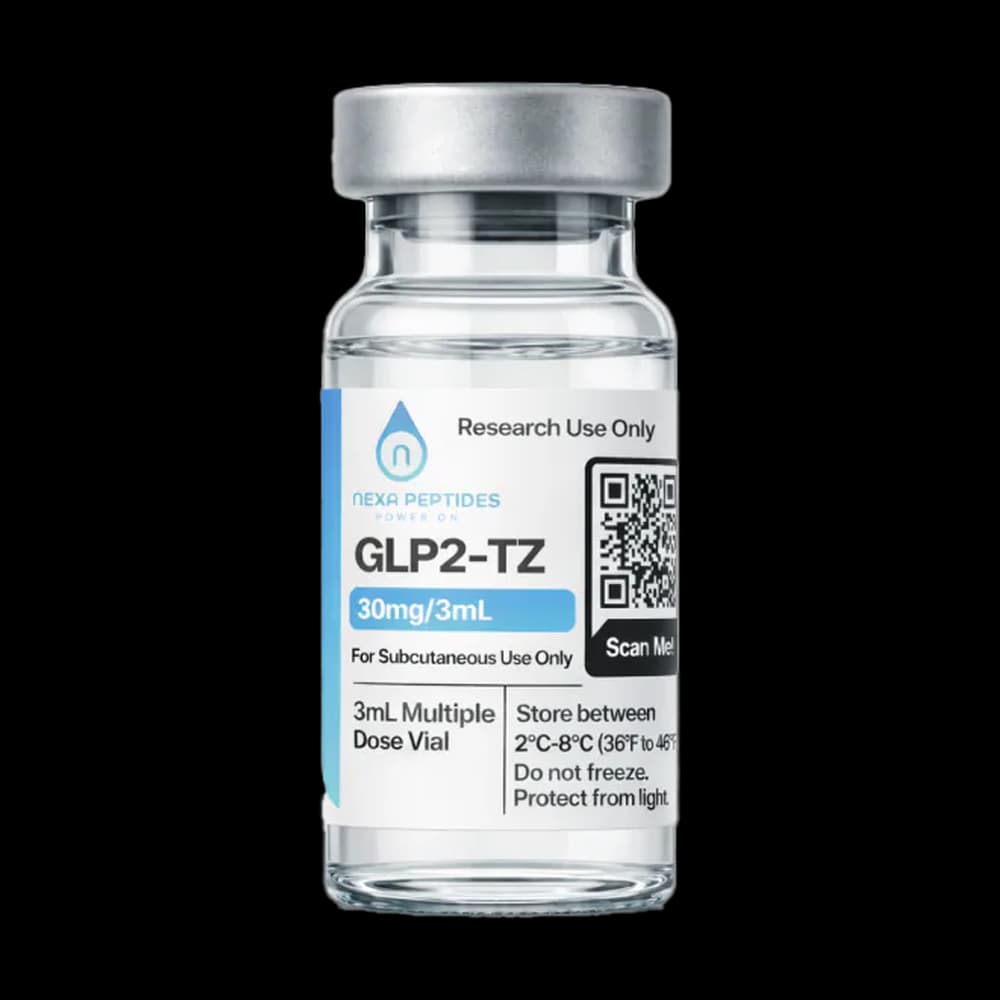
Weight Loss
Tirzepatide — - 30mg
SKU: NXP-TIRZ-30
Tirzepatide is a synthetic peptide designed as a dual agonist for the glucose-dependent insulinotropic polypeptide (GIP) receptor and the glucagon-like peptide-1 (GLP-1) receptor. *INCLUDES 3ML BACTERIOSTATIC WATER. FOR RESEARCH USE ONLY
Product Details
Tirzepatide is a dual-acting incretin receptor agonist targeting GLP-1 and GIP pathways. This 30mg formulation provides an extended-quantity vial for larger research protocols investigating dual incretin modulation and metabolic regulation.
The dual agonist approach allows researchers to study the additive and synergistic effects of concurrent GLP-1 and GIP receptor activation. Research areas include investigation of weight management pathways, glycemic control mechanisms, lipid metabolism, and the gut-brain axis. Preclinical studies have highlighted the potential for dual agonism to enhance metabolic outcomes beyond what single-target approaches achieve, making this compound a valuable research tool.
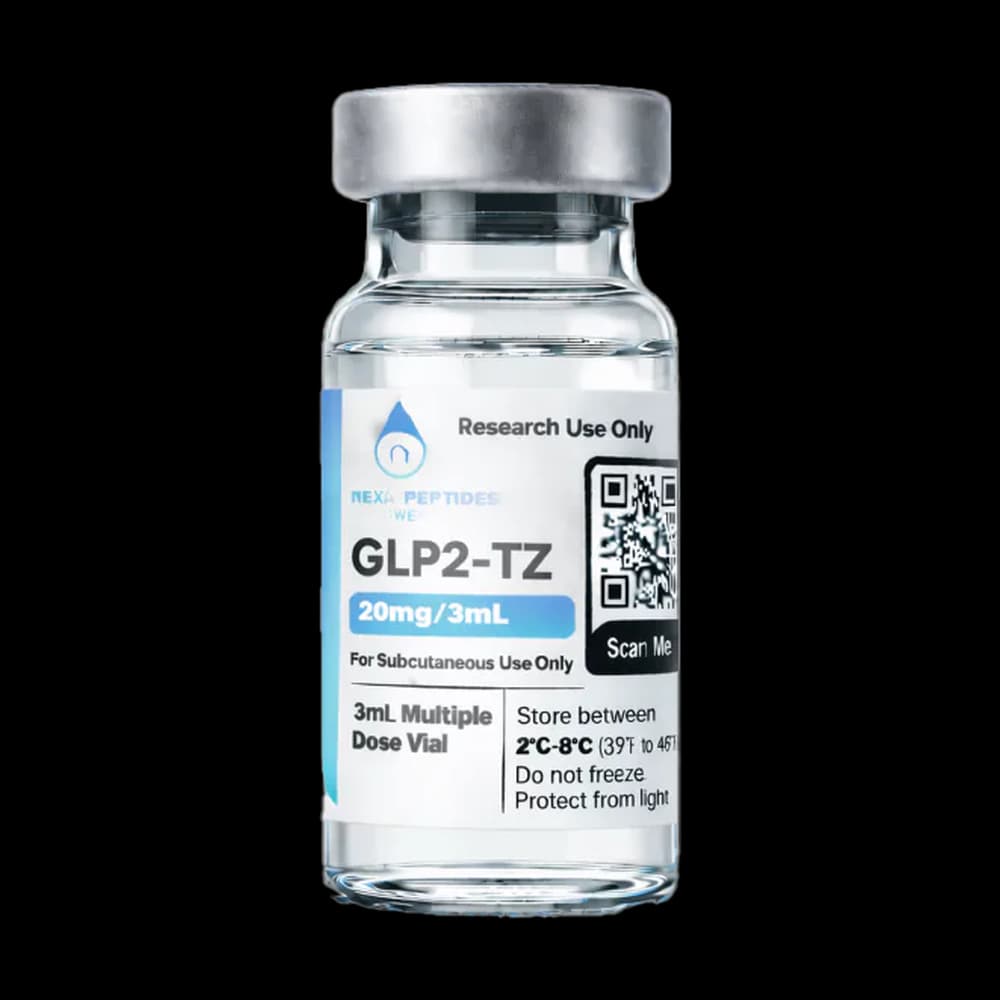
Each vial contains 30mg of high-purity lyophilized GLP2-TZ, manufactured under strict GMP conditions. Purity exceeds 98% as confirmed by HPLC, with mass spectrometry and bacterial endotoxin testing for additional quality assurance. Certificate of analysis available upon request.
Storage: Store lyophilized at -20°C. Reconstituted at 2-8°C, use within 60 days
For research and laboratory use only.
About Tirzepatide
Tirzepatide is a synthetic peptide of significant interest in metabolic research, distinguished by its novel mechanism as a dual agonist for both the glucose-dependent insulinotropic polypeptide (GIP) and glucagon-like peptide-1 (GLP-1) receptors. Structurally, it is a linear peptide composed of 39 amino acids. Its sequence is based on the native GIP sequence but has been modified to confer GLP-1 receptor activity. A crucial structural feature is the conjugation of a C20 fatty-diacid moiety to the lysine residue at position 20. This modification facilitates non-covalent binding to serum albumin, which dramatically extends the peptide's pharmacokinetic half-life, making it suitable for less frequent administration in longitudinal research studies.
The development of Tirzepatide represents a key advancement in the study of incretin-based therapies. While GLP-1 receptor agonists have been extensively investigated, the synergistic potential of co-activating the GIP receptor pathway is a frontier of metabolic science. The GIP receptor, historically viewed with some ambiguity in the context of type 2 diabetes models, is now being re-evaluated for its role in insulin secretion, lipid metabolism, and energy homeostasis. Tirzepatide provides researchers with a powerful tool to dissect the distinct and overlapping contributions of these two critical incretin pathways.
Its unique dual-agonist profile makes Tirzepatide a subject of intense investigation in preclinical models of obesity, type 2 diabetes, and related metabolic disorders like non-alcoholic steatohepatitis (NASH). Researchers utilize this peptide to explore fundamental questions about appetite regulation, glucose-dependent insulin secretion, energy expenditure, and lipid metabolism. By comparing its effects to those of selective GLP-1 or GIP agonists, studies can elucidate the complex interplay between these two systems. Supplied by Nexa Peptides as a high-purity lyophilized powder, our Tirzepatide is intended exclusively for in vitro and in vivo laboratory research applications. This product is not intended for human consumption.
Mechanism of Action
The mechanism of action of Tirzepatide is defined by its function as a biased agonist at two distinct G-protein coupled receptors (GPCRs): the glucagon-like peptide-1 receptor (GLP-1R) and the glucose-dependent insulinotropic polypeptide receptor (GIPR). Its novelty lies in this dual agonism, which is believed to produce synergistic effects on metabolic regulation that are greater than those achievable with selective agonism of either receptor alone.
Upon binding to the GLP-1R, primarily located on pancreatic β-cells, neurons in the central nervous system (CNS), and other peripheral tissues, Tirzepatide initiates a signaling cascade. This activation stimulates adenylyl cyclase, leading to an increase in intracellular concentrations of cyclic adenosine monophosphate (cAMP). Elevated cAMP levels subsequently activate Protein Kinase A (PKA) and Exchange Protein Activated by cAMP 2 (EPAC2). In pancreatic β-cells, this PKA- and EPAC2-mediated pathway potentiates glucose-dependent insulin secretion, a process critical for maintaining glucose homeostasis. In the CNS, particularly the hypothalamus, GLP-1R activation is integral to the regulation of appetite, promoting satiety and reducing energy intake.
Simultaneously, Tirzepatide acts as an agonist at the GIPR. The GIPR is also highly expressed on pancreatic β-cells, as well as on adipocytes and in the brain. Similar to GLP-1R signaling, GIPR activation also elevates intracellular cAMP levels, thereby enhancing glucose-dependent insulin secretion. The GIP component of Tirzepatide's action is an area of active research; while GIP is a potent incretin, its role in energy metabolism is complex. In adipocytes, GIPR signaling is linked to lipid metabolism and may influence fat storage and nutrient handling. The combined signaling through both receptors appears to offer a more comprehensive physiological response to nutrient intake than either pathway alone.
From a molecular pharmacology perspective, Tirzepatide is considered a 'biased agonist', meaning it may preferentially activate certain downstream signaling pathways over others, potentially fine-tuning the physiological response and minimizing off-target effects studied in cellular models. The structural modification—a C20 fatty-diacid linker—is critical to its pharmacokinetics. This moiety allows Tirzepatide to reversibly bind to serum albumin, forming a depot in circulation. This sequestration protects the peptide from rapid degradation by dipeptidyl peptidase-4 (DPP-4) and clearance by the kidneys, resulting in a significantly prolonged elimination half-life. This extended duration of action is a key feature for researchers conducting long-term metabolic studies in animal models, allowing for sustained receptor engagement with less frequent administration.
Research Applications
Tirzepatide is a premier investigational tool for researchers focused on metabolic diseases, endocrinology, and related fields. Its primary application is in preclinical studies of obesity and type 2 diabetes, where its dual incretin receptor agonism provides a unique avenue for exploring complex physiological pathways. In animal models of obesity, such as diet-induced obese (DIO) mice and rats, Tirzepatide is studied for its effects on body weight reduction, adiposity, and food intake. These studies aim to dissect the central and peripheral mechanisms contributing to weight loss, including hypothalamic appetite signaling and changes in energy expenditure.
In the context of diabetes research, Tirzepatide is utilized in models like the Zucker diabetic fatty (ZDF) rat or streptozotocin-induced diabetic models to investigate its impact on glycemic control. Research objectives often include quantifying its ability to improve glucose tolerance, enhance glucose-dependent insulin secretion from isolated pancreatic islets, and increase insulin sensitivity in peripheral tissues like muscle, liver, and adipose tissue. Comparative studies are frequently designed to benchmark the effects of Tirzepatide against selective GLP-1 receptor agonists, thereby isolating the specific contributions of GIP receptor co-activation to overall metabolic improvement.
Beyond glycemic control and weight, the research applications of Tirzepatide extend to associated metabolic comorbidities. Its effects are being investigated in preclinical models of non-alcoholic fatty liver disease (NAFLD) and its more severe form, non-alcoholic steatohepatitis (NASH). In these studies, researchers assess its potential to reduce hepatic steatosis (fat accumulation), inflammation, and fibrosis by analyzing liver histology and relevant biochemical markers. This line of inquiry explores the interplay between incretin signaling and hepatic lipid metabolism.
Cardiovascular research represents another important application. Given the strong link between metabolic syndrome and cardiovascular disease, studies in relevant animal models examine Tirzepatide's effects on lipid profiles (e.g., triglycerides, cholesterol), blood pressure, and markers of systemic inflammation and endothelial function. These investigations seek to understand whether the metabolic benefits observed with Tirzepatide translate to improvements in cardiovascular risk parameters in a laboratory setting. All such applications are strictly for non-human, in vitro or in vivo research to advance fundamental scientific understanding. For Research Use Only.
Formulation & Handling
For optimal stability and research integrity, Tirzepatide is supplied as a lyophilized (freeze-dried) white powder. In its lyophilized state, the peptide should be stored at -20°C for long-term preservation. For short-term storage (weeks), refrigeration at 2°C to 8°C is acceptable. It is crucial to protect the product from direct light and moisture to prevent degradation.
Reconstitution should be performed under sterile conditions. The recommended solvent is bacteriostatic water containing 0.9% benzyl alcohol, which helps maintain sterility for multiple uses from the same vial. To reconstitute, slowly inject the desired volume of bacteriostatic water into the vial, allowing it to run down the side of the glass. Do not inject directly into the lyophilized powder. Gently swirl or roll the vial until the powder is fully dissolved. Avoid vigorous shaking or sonication, as this can cause aggregation and denaturation of the peptide structure, compromising its biological activity.
Once reconstituted, the Tirzepatide solution should be stored at 2°C to 8°C and is typically stable for several weeks. For studies requiring long-term use, it is best practice to prepare aliquots of the freshly reconstituted solution into sterile, low-protein-binding microcentrifuge tubes and store them at -20°C. This practice minimizes waste and prevents degradation associated with repeated freeze-thaw cycles. Before use in an experiment, frozen aliquots should be thawed slowly on ice or at room temperature. Proper handling and storage are paramount to ensuring consistent and reproducible results in any research setting.
Quality Standards
Nexa Peptides is committed to providing researchers with the highest quality Tirzepatide for laboratory applications. Our quality control process ensures that each batch meets stringent specifications for purity, identity, and safety. The purity of our Tirzepatide is verified to be greater than 99% using High-Performance Liquid Chromatography (HPLC). This analytical technique separates the target peptide from any potential impurities, ensuring that experimental outcomes are attributable solely to the compound under investigation.
To confirm the structural integrity and identity of the peptide, each batch undergoes Mass Spectrometry (MS) analysis. This method verifies that the molecular weight of the synthesized peptide matches its theoretical mass, confirming the correct amino acid sequence and the successful conjugation of the C20 fatty-diacid moiety. This verification is critical for ensuring the peptide's intended biological activity and pharmacokinetic profile.
Furthermore, all lots are tested for endotoxins to ensure they are suitable for use in both in vitro cell culture experiments and in vivo animal models without eliciting non-specific inflammatory responses. Our Tirzepatide is synthesized in a facility that adheres to cGMP (Current Good Manufacturing Practice) principles, guaranteeing consistency, traceability, and quality from synthesis to final product. A comprehensive, third-party Certificate of Analysis (COA) is available for every lot, providing researchers with full transparency and confidence in the product they are using for their critical research. This product is strictly for Research Use Only.
Frequently Asked Questions
What is Tirzepatide?
How is Tirzepatide synthesized?
What is the molecular weight of Tirzepatide?
What research areas use Tirzepatide?
How should Tirzepatide be stored?
How should Tirzepatide be reconstituted for research?
What purity grade is Nexa Peptides' Tirzepatide?
Is Tirzepatide available with a Certificate of Analysis?
Explore Related Research
Customer Reviews
4 reviews
Elena V.Verified PurchaseJun 11, 2026
Quality is there. Checkout was a little clunky on mobile, but the order itself went through without a problem.
Wade N.Jun 7, 2026
About three weeks in and my appetite is finally under control. I am not raiding the pantry at night anymore and the scale has started to move.
Sofia E.Verified PurchaseMay 30, 2026
Took a chance based on a friend's recommendation and I am glad I did. Quality has been excellent across two orders and the prices beat the couple of other places I had been using.
Amanda VenturaMar 28, 2026
Let me start by saying if you are on the fence, just do it!! You will not be sorry!! If you’re anything like me you’ve been down the rabbit hole researching the product, what it does, side effects, cost, and will you have proper support if and when needed. Nexa Peptides checks all those boxes!! Since I’ve started this GLP-1 (7 weeks ago) I have lost 12 lbs! I never felt nauseous or had any other side effects!! Customer support has always been on point as well!! At this point I am so pleased with my results, I have been telling everyone I know to try these products!! I have also started stacking other products and will review after a few weeks!! So like I said…. Just do it, you won’t be sorry!