
Sexual Health
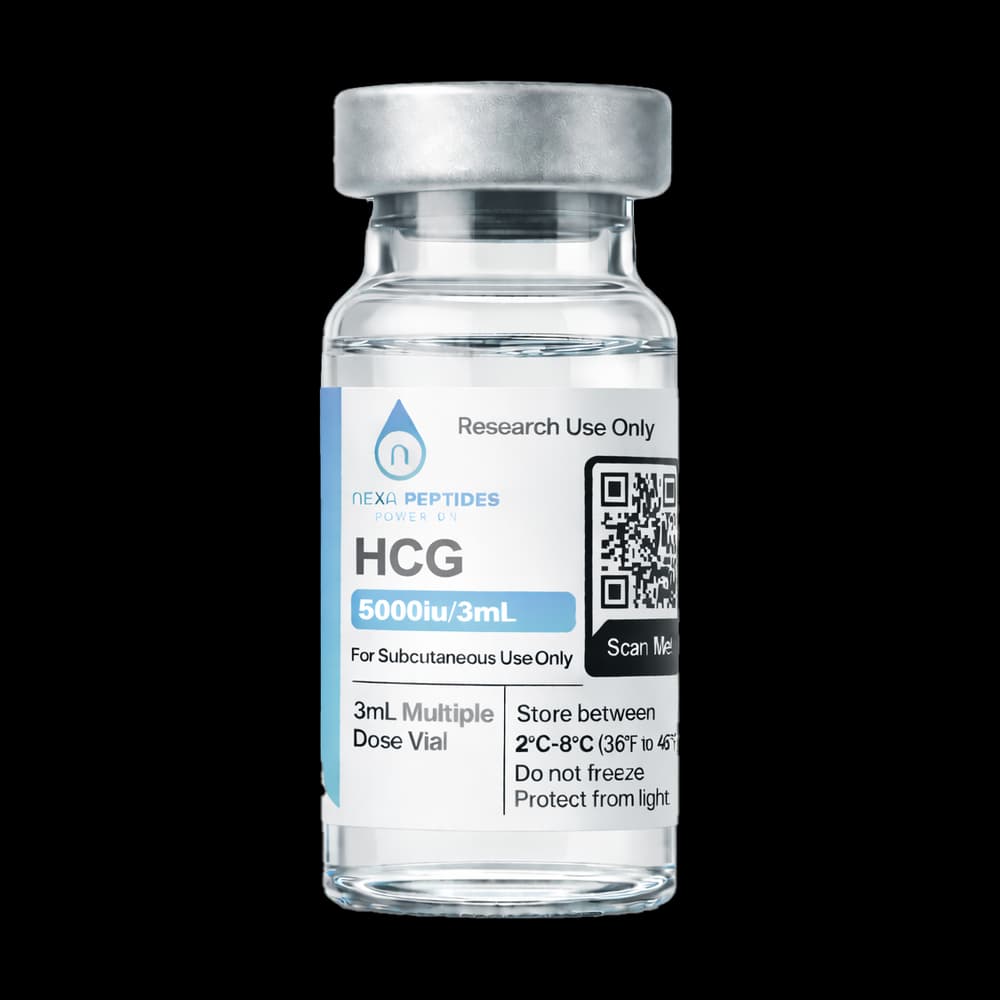
HCG (Human Chorionic Gonadotropin) — HCG 5000iu
SKU: NXP-HCG-01
Product Details
Human Chorionic Gonadotropin (HCG) is a glycoprotein hormone naturally produced during pregnancy, consisting of an alpha subunit shared with LH, FSH, and TSH, and a unique beta subunit that confers its biological specificity. HCG binds to the LH/CG receptor and is structurally and functionally similar to luteinizing hormone.
Research applications for HCG span reproductive biology, endocrinology, and fertility studies. It is widely used in research protocols investigating gonadal function, steroidogenesis, and the hypothalamic-pituitary-gonadal axis. Studies have examined its effects on testosterone production, ovarian stimulation, and spermatogenesis in various research models.
Each vial contains highly purified HCG in lyophilized form, produced under strict quality controls with purity and potency verified by immunoassay and bioassay methods. Batch-to-batch consistency is ensured through comprehensive quality assurance testing.
Store lyophilized at -20C. Reconstituted at 2-8C, use within 30 days.
For research and laboratory use only.
About HCG (Human Chorionic Gonadotropin)
Human Chorionic Gonadotropin (HCG) is a heterodimeric glycoprotein hormone indispensable for a wide range of endocrinological research. Structurally, HCG is composed of two dissimilar subunits, an alpha (α) and a beta (β) subunit, linked by non-covalent bonds. The α-subunit consists of 92 amino acids and is virtually identical to the alpha subunits of other glycoprotein hormones, including Luteinizing Hormone (LH), Follicle-Stimulating Hormone (FSH), and Thyroid-Stimulating Hormone (TSH). The biological and receptor specificity of HCG is conferred by its unique β-subunit, which is composed of 145 amino acids and shares significant sequence homology with the β-subunit of LH. This structural mimicry allows HCG to bind to and activate the LH receptor with high affinity, making it a powerful tool for investigating LH-mediated signaling pathways.
The profound biological activity of HCG is heavily dependent on its glycosylation. Both subunits contain N-linked and O-linked carbohydrate moieties that are critical for proper protein folding, heterodimer assembly, plasma half-life, and signal transduction efficacy. The extended carboxy-terminal peptide on the β-subunit, which contains several O-linked glycosylation sites, is a key structural feature that distinguishes HCG from LH and contributes to its significantly longer circulatory half-life, a property of interest in various experimental models.
For researchers, HCG serves as a stable and potent agonist for the Luteinizing Hormone/Chorionic Gonadotropin Receptor (LHCGR). Its application in laboratory settings is extensive, primarily in studies focused on steroidogenesis, gonadal cell function, and the intricate mechanisms of the hypothalamic-pituitary-gonadal (HPG) axis. By providing a reliable method to stimulate the LHCGR, HCG allows for detailed investigation into downstream cellular events, from second messenger activation to gene transcription and steroid hormone synthesis in various preclinical models. Its availability as a high-purity, lyophilized peptide ensures consistency and reproducibility for demanding research applications.
Nexa Peptides provides HCG exclusively for laboratory and research purposes. This product is not intended for human or veterinary use. Its application should be confined to in vitro and in vivo research settings by qualified scientific professionals.
Mechanism of Action
The primary mechanism of action for Human Chorionic Gonadotropin (HCG) is mediated through its high-affinity binding to the Luteinizing Hormone/Chorionic Gonadotropin Receptor (LHCGR). The LHCGR is a member of the G protein-coupled receptor (GPCR) superfamily, characterized by seven transmembrane domains. These receptors are predominantly expressed on the plasma membranes of specialized cells, most notably on testicular Leydig cells and ovarian theca, granulosa, and luteal cells. The expression of LHCGR has also been identified in various non-gonadal tissues in research models, suggesting a broader, though less understood, physiological role.
Upon binding of HCG to the extracellular domain of the LHCGR, a conformational change is induced in the receptor. This change facilitates the coupling and activation of an intracellular heterotrimeric G protein, primarily the stimulatory G protein, Gαs. Activation of Gαs leads to the dissociation of its GDP-bound alpha subunit, which then binds GTP and subsequently activates the membrane-bound enzyme adenylyl cyclase (AC). Activated AC catalyzes the conversion of ATP to cyclic adenosine monophosphate (cAMP), a crucial second messenger in this signaling cascade.
The elevation of intracellular cAMP concentration is a pivotal event in HCG-mediated signaling. cAMP activates Protein Kinase A (PKA) by binding to its regulatory subunits, causing their dissociation from the catalytic subunits. The now-active PKA catalytic subunits phosphorylate a multitude of downstream protein targets on serine and threonine residues. In steroidogenic cells, a key substrate of PKA is the cAMP Response Element-Binding Protein (CREB), a transcription factor that, upon phosphorylation, translocates to the nucleus and modulates the expression of genes essential for steroidogenesis.
A critical PKA-mediated event is the phosphorylation and activation of the Steroidogenic Acute Regulatory (StAR) protein. The StAR protein facilitates the transport of cholesterol, the precursor for all steroid hormones, from the outer mitochondrial membrane to the inner mitochondrial membrane. This transport is the rate-limiting step in steroid hormone synthesis. Once inside the mitochondria, cholesterol is converted to pregnenolone by the enzyme cholesterol side-chain cleavage enzyme (P450scc). Pregnenolone then serves as the substrate for a series of enzymatic reactions within the smooth endoplasmic reticulum and mitochondria, ultimately leading to the synthesis of testosterone in Leydig cells or progesterone and estrogens in ovarian cells.
While the Gαs/cAMP/PKA pathway is the canonical and dominant signaling route for HCG, evidence from in vitro studies suggests that LHCGR can also couple to other G proteins, such as Gαq/11. This alternative pathway activates phospholipase C (PLC), which hydrolyzes phosphatidylinositol 4,5-bisphosphate (PIP2) into inositol trisphosphate (IP3) and diacylglycerol (DAG). IP3 triggers the release of calcium from intracellular stores, while DAG activates Protein Kinase C (PKC). This parallel pathway can modulate cellular responses and may play a role in processes such as cell proliferation and differentiation, adding another layer of complexity to the molecular actions being investigated with HCG.
Research Applications
The unique ability of HCG to potently activate the LHCGR makes it an invaluable tool across several domains of biomedical research. Its primary application lies within the field of reproductive endocrinology, where it is used as a surrogate for Luteinizing Hormone (LH) in a variety of in vitro and in vivo experimental models. Researchers utilize HCG in Leydig and theca cell cultures to investigate the molecular machinery of steroidogenesis, studying the regulation of key enzymes, cholesterol transport mechanisms, and gene expression patterns following receptor activation. In animal models, HCG is frequently employed to study the physiological processes of ovulation, luteinization, and the maintenance of corpus luteum function, providing critical insights into the hormonal control of reproduction.
In studies involving models of hypogonadism, HCG is used to probe the functional capacity of gonadal steroidogenic cells. By administering HCG to animal models with compromised hypothalamic or pituitary function (secondary hypogonadism), researchers can directly assess the responsiveness of the testes or ovaries. These experiments help to differentiate between central and peripheral defects in the HPG axis and explore the potential for restoring endocrine function at the gonadal level. Such studies are fundamental to understanding the pathophysiology of various reproductive disorders.
Oncology research represents another significant area of investigation for HCG. The ectopic expression of LHCGR has been documented in various non-gonadal cancer cell lines and tumor tissues, including prostate, breast, endometrial, and adrenal cancers. Laboratory research focuses on elucidating the functional consequences of HCG-LHCGR signaling in these contexts. Studies using cell culture and xenograft models investigate whether HCG stimulation influences cancer cell proliferation, apoptosis, invasion, or angiogenesis. These mechanistic explorations aim to define the role, if any, of the HCG/LHCGR axis in tumor biology, potentially identifying novel signaling pathways relevant to carcinogenesis.
Furthermore, HCG is studied for its immunomodulatory properties, particularly in the context of reproductive immunology. As a hormone produced at high levels by the syncytiotrophoblast during pregnancy, it is hypothesized to play a role in establishing maternal immune tolerance to the semi-allogeneic fetus. In vitro research investigates the effects of HCG on various immune cell populations, such as T lymphocytes, dendritic cells, and uterine natural killer cells. These studies examine its impact on cytokine production, cell differentiation, and cytotoxic activity, aiming to unravel the mechanisms by which HCG may contribute to a successful pregnancy outcome. All such applications are strictly for preclinical research and are not for therapeutic or clinical use.
Formulation & Handling
For optimal stability and integrity, lyophilized HCG (Human Chorionic Gonadotropin) should be stored in a freezer at or below -20°C. When stored under these conditions, the lyophilized powder remains stable for an extended period. For short-term storage prior to reconstitution, refrigeration at 2-8°C is acceptable. It is crucial to protect the product from direct light exposure at all times.
Reconstitution should be performed under aseptic laboratory conditions. The recommended solvent for reconstitution is sterile bacteriostatic water containing 0.9% benzyl alcohol, which helps maintain sterility for multi-use vials. To reconstitute, slowly inject the appropriate volume of solvent down the side of the vial to avoid foaming or agitation of the peptide. Do not shake the vial vigorously. Instead, gently swirl or rotate the vial until the lyophilized powder is completely dissolved. The resulting solution should be clear and free of particulates.
Once reconstituted, the HCG solution should be stored refrigerated at 2-8°C and is typically stable for several weeks. Avoid repeated freeze-thaw cycles, as this can lead to degradation of the glycoprotein structure and loss of biological activity. For experiments spanning a longer duration, it is best practice to aliquot the freshly reconstituted solution into smaller, single-use volumes (e.g., in sterile polypropylene tubes) and store them frozen at -20°C. This practice ensures that a fresh, stable aliquot is available for each experiment, maximizing reproducibility and preserving the peptide's integrity over the course of the study.
Quality Standards
At Nexa Peptides, we are committed to providing researchers with HCG (Human Chorionic Gonadotropin) of the highest possible quality and purity to ensure the validity and reproducibility of experimental results. Each batch of our HCG is subjected to a stringent quality control protocol. Purity is meticulously assessed using High-Performance Liquid Chromatography (HPLC), with every lot guaranteed to exceed 99% purity. This analytical technique separates, identifies, and quantifies each component in the mixture, ensuring the final product is free from significant impurities or fragments.
To confirm the identity and structural integrity of the peptide, each batch undergoes Mass Spectrometry (MS) analysis. This method provides a precise measurement of the molecular weight of the heterodimeric glycoprotein, verifying that it corresponds to the correct primary amino acid sequence and is properly assembled. This step is critical for confirming that the correct molecule has been synthesized before it is released for sale.
Furthermore, our HCG is tested for endotoxins to ensure it is suitable for use in sensitive in vitro and cell culture applications where contaminants could interfere with cellular processes and experimental outcomes. Our products are synthesized and lyophilized in a cGMP (Current Good Manufacturing Practice)-compliant facility, adhering to rigorous standards for process control and quality assurance. A comprehensive, third-party Certificate of Analysis (COA) is available for every lot, providing researchers with full transparency and documentation of our quality standards, including HPLC and MS data. This commitment to quality ensures that the HCG supplied by Nexa Peptides is a reliable and consistent reagent for advanced scientific research.
Frequently Asked Questions
What is HCG (Human Chorionic Gonadotropin)?
How is HCG (Human Chorionic Gonadotropin) synthesized?
What is the molecular weight of HCG (Human Chorionic Gonadotropin)?
What research areas use HCG (Human Chorionic Gonadotropin)?
How should HCG (Human Chorionic Gonadotropin) be stored?
How should HCG (Human Chorionic Gonadotropin) be reconstituted for research?
What purity grade is Nexa Peptides' HCG (Human Chorionic Gonadotropin)?
Is HCG (Human Chorionic Gonadotropin) available with a Certificate of Analysis?
Explore Related Research
Customer Reviews
4 reviews
Gabe M.Verified PurchaseJun 1, 2026
Met every expectation. Arrived in plain packaging and worked just as it should.
Gina F.Verified PurchaseApr 16, 2026
Did what I was hoping for and the whole order was handled quietly and quickly. No complaints at all.
Mark F.Verified PurchaseMar 18, 2026
Discreet, effective, and shipped fast. Could not ask for more from this kind of purchase.
Jason A.Mar 17, 2026
Exactly as pictured. Very happy.