
Recovery
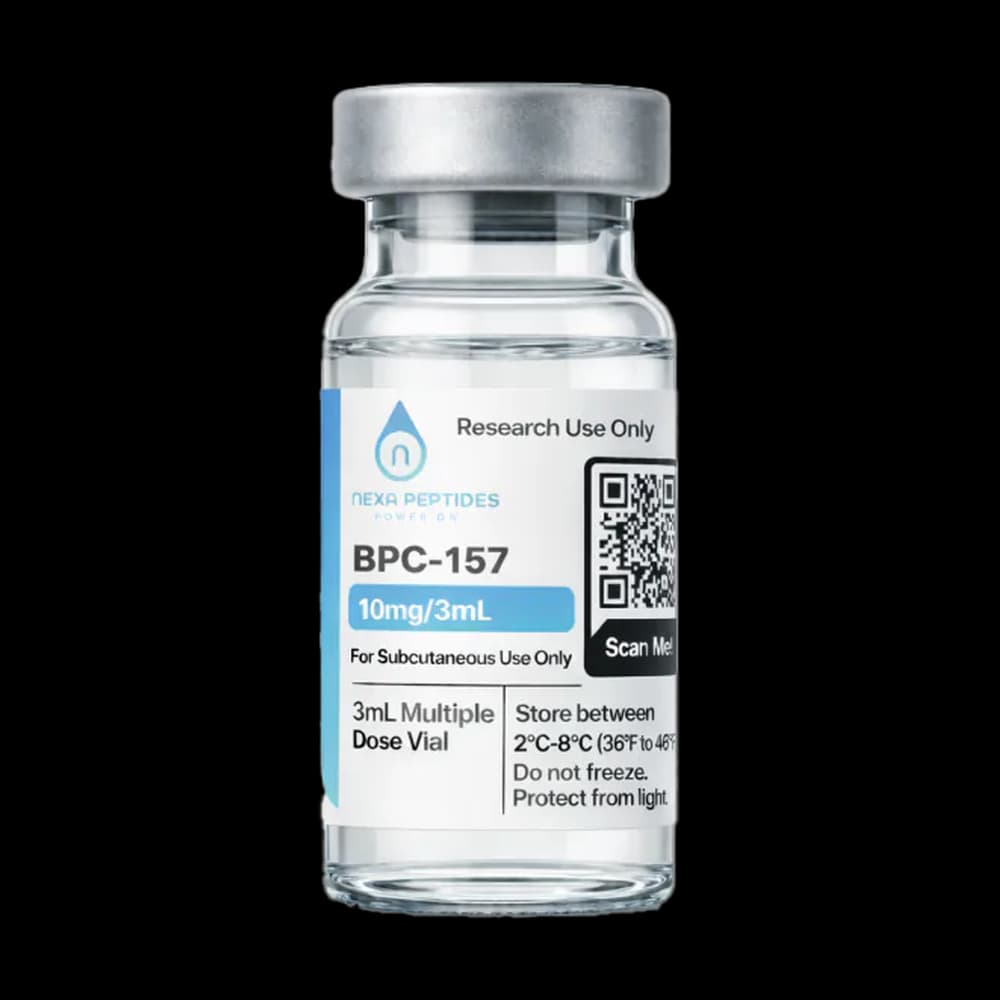
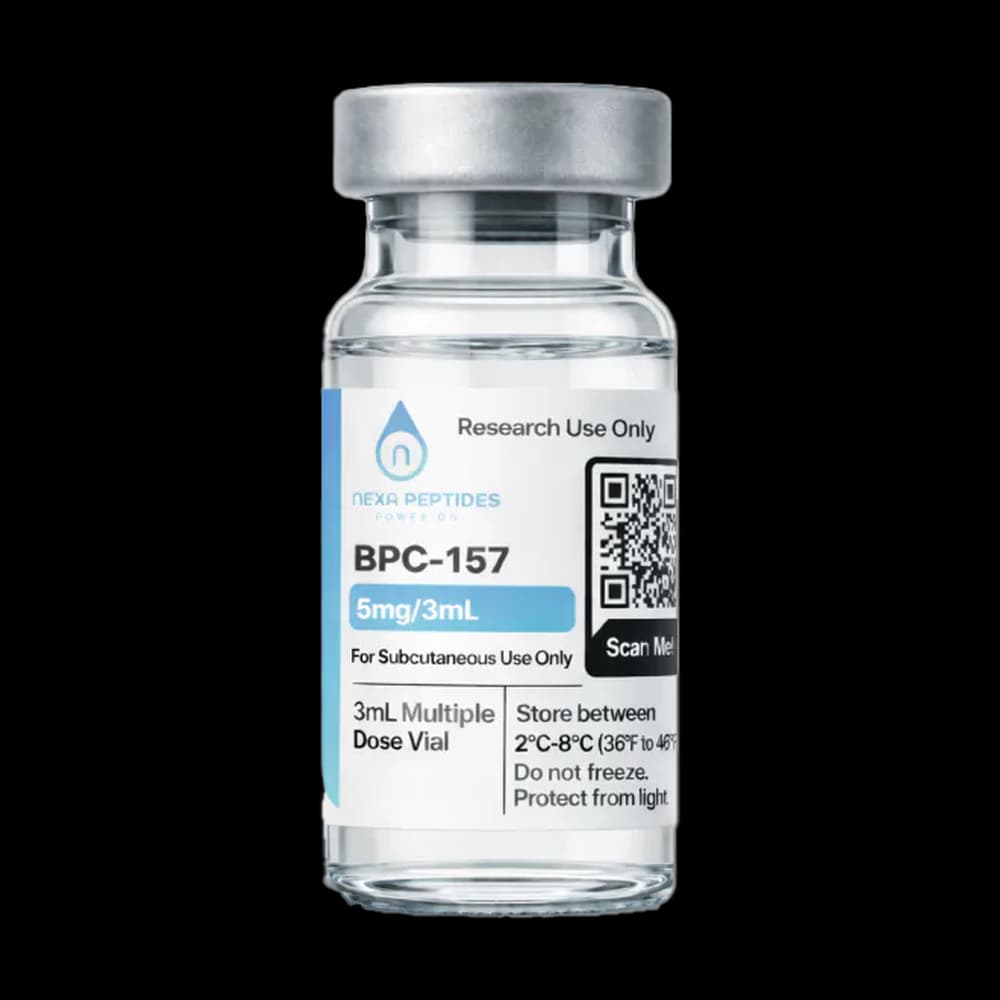
BPC-157 — - 5mg
SKU: NXP-BPC-5
BPC-157 5mg lyophilized peptide. A synthetic peptide studied for its role in tissue repair pathways, angiogenesis, and cellular regeneration. For research use only.
Product Details
BPC-157, or Body Protection Compound-157, is a synthetic pentadecapeptide consisting of 15 amino acids derived from a protective protein found in gastric juice. This 5mg lyophilized preparation has been extensively studied in preclinical research for its role in tissue repair, wound healing, and recovery processes.
Research has demonstrated that BPC-157 may support angiogenesis, tendon-to-bone healing, and gastrointestinal mucosal integrity. Studies in animal models have shown promising results in accelerating the healing of various tissue types including muscle, tendon, ligament, and nerve tissue.
Each vial contains 5mg of highly purified BPC-157, manufactured under strict quality controls with a purity level exceeding 98% as verified by HPLC analysis and mass spectrometry. Third-party testing ensures consistency across every batch.
Store lyophilized at -20C. Reconstituted at 2-8C, use within 60 days.
For research and laboratory use only.
About BPC-157
BPC-157 is a synthetic pentadecapeptide composed of 15 amino acids with the sequence Gly-Glu-Pro-Pro-Pro-Gly-Lys-Pro-Ala-Asp-Asp-Ala-Gly-Leu-Val. It is a partial sequence of a human gastric juice protein known as Body Protection Compound (BPC), from which its name is derived. This peptide has garnered significant interest within the research community due to its remarkable stability and pleiotropic biological activities observed in a wide range of preclinical models. Unlike many endogenous peptides that degrade rapidly in the gastrointestinal tract, BPC-157 exhibits unusual stability, making it a robust subject for in vitro and in vivo laboratory investigations.
The peptide's molecular structure, with a molecular weight of 1419.5 g/mol, is central to its function. Its sequence does not conform to a typical signaling peptide motif, and it notably lacks a specific, high-affinity receptor identified to date. This suggests that its mechanism of action may be unconventional, possibly involving the modulation of multiple downstream pathways or direct interaction with cellular components like growth factor receptors or cytoskeletal proteins. This unique characteristic has made BPC-157 a compelling tool for researchers exploring novel mechanisms of tissue repair, cytoprotection, and homeostatic regulation.
In laboratory settings, BPC-157 has been investigated for a broad spectrum of potential applications, including the study of musculoskeletal injuries, gastrointestinal pathologies, and neurological insults. Its capacity to influence angiogenesis, modulate nitric oxide signaling, and interact with various growth factor pathways has been a primary focus of study. Researchers utilize BPC-157 to probe the fundamental cellular and molecular processes underlying tissue regeneration and the body's intrinsic repair systems. As a research-grade compound, it provides a standardized tool for exploring these complex biological phenomena. All products supplied by Nexa Peptides, including BPC-157, are intended strictly for in vitro research and laboratory use only and are not for human or animal consumption.
Mechanism of Action
The mechanism of action for BPC-157 is multifaceted and appears to be mediated through the modulation of several key signaling pathways rather than binding to a single, specific receptor. A central aspect of its activity observed in research models is its profound influence on angiogenesis, the formation of new blood vessels. Studies indicate that BPC-157 can upregulate the expression of Vascular Endothelial Growth Factor Receptor 2 (VEGFR2). The activation of VEGFR2 initiates downstream signaling cascades, including the FAK-paxillin and PI3K/Akt/eNOS pathways. The Focal Adhesion Kinase (FAK) and paxillin are critical components of focal adhesions, which mediate cell adhesion and migration. By activating this axis, BPC-157 is thought to promote endothelial cell migration and proliferation, essential steps in angiogenesis.
Simultaneously, the activation of the PI3K/Akt pathway leads to the phosphorylation and activation of endothelial Nitric Oxide Synthase (eNOS). This increases the production of nitric oxide (NO), a potent vasodilator and signaling molecule that enhances blood flow and vessel permeability, further supporting tissue repair. The ability of BPC-157 to modulate the NO system is a hallmark of its activity; it has been shown to normalize NO levels in conditions of both over- and under-production, suggesting a homeostatic regulatory role. This effect is crucial for maintaining endothelial integrity and responding to ischemic or inflammatory insults in experimental models.
BPC-157's cytoprotective effects are also linked to its interaction with the cellular cytoskeleton. Research suggests it can promote the reorganization of F-actin in fibroblasts, enhancing their structural integrity and migratory capacity. This cytoskeletal stabilization is thought to contribute to its observed effects on tendon and ligament healing in animal models, where organized collagen deposition and tissue strength are paramount. Furthermore, BPC-157 has been investigated for its ability to counteract the damaging effects of various toxins and stressors, such as NSAIDs in gastric tissue models. This protection is partly attributed to its ability to maintain epithelial barrier function and reduce inflammatory responses.
In addition to these pathways, BPC-157 may modulate the activity of various growth factors. Some studies suggest it can influence the expression or signaling of Nerve Growth Factor (NGF) and Epidermal Growth Factor (EGF), contributing to its neuroprotective and wound-healing properties observed in preclinical research. From an anti-inflammatory perspective, BPC-157 has been shown to attenuate the expression of pro-inflammatory cytokines like TNF-α and IL-6 in certain inflammatory models. This complex interplay of pro-angiogenic, cytoprotective, and anti-inflammatory signaling pathways makes BPC-157 a subject of intense investigation for understanding endogenous repair mechanisms. For Research Use Only.
Research Applications
BPC-157 is a versatile peptide utilized across multiple domains of biomedical research, primarily focusing on tissue repair, cytoprotection, and anti-inflammatory mechanisms. A significant body of preclinical research has been conducted in the field of musculoskeletal science. In various rodent models of injury, such as tendon transection, ligament damage, and muscle contusion, researchers have investigated the effects of BPC-157 administration on healing outcomes. These studies often assess parameters like collagen fiber organization via histology, tensile strength of repaired tissues, and functional recovery rates. The objective of such research is to elucidate the molecular pathways, like the FAK-paxillin axis, that govern the repair of connective tissues.
Given its origins from a gastric protein, gastroenterology is another primary area of investigation. BPC-157 has been extensively studied in animal models of gastrointestinal pathology. This includes research into NSAID-induced gastric lesions, where its cytoprotective properties are examined, and models of Inflammatory Bowel Disease (IBD), where its anti-inflammatory and barrier-protective functions are explored. Researchers use these models to understand how BPC-157 might mitigate mucosal damage, promote ulcer healing, and maintain the integrity of the gastrointestinal epithelial barrier.
In cardiovascular research, BPC-157 has been employed in models of ischemia-reperfusion injury and peripheral artery disease. Investigations focus on its pro-angiogenic effects, mediated by the VEGF/VEGFR2 pathway, and its ability to modulate the nitric oxide system. Studies in rodent models with induced hindlimb ischemia, for instance, are used to evaluate its potential to stimulate collateral vessel formation and restore blood flow to compromised tissues. These experiments provide insights into peptide-mediated regulation of endothelial function and vascular homeostasis.
Neurological research represents another frontier for BPC-157 investigations. Preclinical studies using models of traumatic brain injury (TBI), spinal cord injury, and chemically induced neurotoxicity have explored its neuroprotective potential. Researchers assess its effects on neuronal survival, glial scarring, and the modulation of neurotransmitter systems, such as the dopaminergic and serotonergic systems. These studies aim to uncover novel mechanisms for protecting neural tissue from secondary injury cascades and promoting functional recovery in controlled laboratory settings. All applications of BPC-157 are strictly for in vitro laboratory and preclinical research purposes. Not for human use.
Formulation & Handling
For optimal stability and integrity, lyophilized BPC-157 should be stored in a freezer at -20°C. When stored under these conditions, the peptide remains stable for extended periods. For short-term storage prior to reconstitution, refrigeration at 2-8°C is acceptable. It is crucial to protect the lyophilized powder from direct light exposure to prevent degradation.
Reconstitution of BPC-157 for research purposes must be performed using sterile techniques to avoid contamination. The recommended diluent is bacteriostatic water containing 0.9% benzyl alcohol, which helps maintain sterility over multiple uses. To reconstitute, slowly inject the desired volume of bacteriostatic water down the side of the vial, aiming the stream at the glass wall rather than directly onto the lyophilized powder. Do not shake the vial vigorously, as this can cause shearing and denaturation of the peptide. Instead, gently swirl or roll the vial between the palms until the powder is fully dissolved.
Once reconstituted, the BPC-157 solution should be stored in a refrigerator at 2-8°C and used within a specified timeframe, typically a few weeks, to ensure its bioactivity. For experiments spanning longer durations, it is best practice to aliquot the reconstituted solution into smaller, single-use volumes and store them frozen at -20°C. This practice minimizes repeated freeze-thaw cycles and reduces the risk of contamination, ensuring consistency across experiments. Always use sterile syringes and vials when handling the peptide. This product is for laboratory research use only.
Quality Standards
At Nexa Peptides, we are committed to providing researchers with the highest quality compounds to ensure the validity and reproducibility of their scientific investigations. Every batch of our BPC-157 is subject to a rigorous quality control process. Purity is a critical parameter, and we utilize High-Performance Liquid Chromatography (HPLC) to analyze each lot. This analytical technique separates the target peptide from any potential impurities, and we guarantee a purity level of greater than 99% for our BPC-157.
To confirm the identity and structural integrity of the peptide, we employ Mass Spectrometry (MS). This analysis verifies that the molecular weight of the synthesized peptide matches the theoretical mass of the BPC-157 sequence (1419.5 g/mol), ensuring that the correct compound has been produced. Furthermore, each batch undergoes testing for endotoxins using the Limulus Amebocyte Lysate (LAL) assay to ensure it is free from bacterial contaminants that could interfere with experimental results, particularly in cell-based or in vivo studies.
Our BPC-157 is synthesized in a cGMP (Current Good Manufacturing Practice) compliant facility, adhering to strict protocols for production, purification, and handling. To provide complete transparency to our research clients, every lot is accompanied by a Certificate of Analysis (COA) from an independent, third-party laboratory. This COA details the specific results from HPLC and MS analyses, confirming the purity and identity of the product you receive. This commitment to quality and traceability ensures that researchers can proceed with their work with the utmost confidence in their materials. This product is intended for Research Use Only (RUO).
Frequently Asked Questions
What is BPC-157?
How is BPC-157 synthesized?
What is the molecular weight of BPC-157?
What research areas use BPC-157?
How should BPC-157 be stored?
How should BPC-157 be reconstituted for research?
What purity grade is Nexa Peptides' BPC-157?
Is BPC-157 available with a Certificate of Analysis?
Explore Related Research
Customer Reviews
2 reviews
Paige T.Verified PurchaseMay 16, 2026
Had a stubborn elbow issue from climbing and this is the first thing that has actually helped it calm down.
Greg H.Mar 22, 2026
Everything was sealed and labeled cleanly and the packaging was discreet. No notes.